

Podcast Episode
Steven Feldstein joins Jon Bateman on the world unpacked to discuss his new book, Bytes and Bullets, and explain how drones are reshaping wars from Ukraine to Sudan.
Jon Bateman, Steven Feldstein
An ex-head of the Secret Service in his first-ever podcast on growing threats to U.S. leaders.
Invalid video URL
With political violence on the rise and new weapons like drones proliferating, is it still possible to protect America’s leaders? Why has such a basic governmental mission been overstretched and underfunded? Which is the bigger threat—invisible “lone wolves” among us, or nation-states like Iran who openly threaten assassinations?
Ron Rowe was acting director of the U.S. Secret Service, and he personally protected multiple presidents as a career agent. In his first-ever podcast, Ron joins Jon Bateman on The World Unpacked to explain what’s different about today’s threats, how agents stay mentally focused, and why America should build a full-scale replica of the White House.
Note: this is an AI-generated transcript and may contain errors
Jon Bateman: Ron Rowe, welcome to the World Unpacked.
Ron Rowe: Thanks, Jon, thanks for having me. This is my first podcast.
Jon Bateman: I was gonna ask, you know, you have traveled the globe with presidents, you run a major U.S. Government agency. You haven't been on this podcast before, but what I didn't realize is you've never done a podcast.
Ron Rowe: This is my very first podcast, Jon. How does it feel? It feels great. Thank you.
Jon Bateman: Tell me at the end if you still feel that way
Ron Rowe: I will. I will, definitely.
Jon Bateman: Whenever I have an author on, I always get them to sign the book for me before the interview, rather than at the end, just in case I really go tough on them. I still got that signature. We're gonna talk about some of the most challenging issues in American life right now, which is the rise of political violence, threats against our leaders and other high profile people, everything that you have personally devoted your career to. Thank you. Before we get into those big picture questions, I'd love if you could help bring our audience inside the life of a Secret Service agent. You were an agent protecting George W. Bush and other presidents. You supervised all the other agents. It's called the Secret Service for a reason. Most people, especially those living outside the Washington, D.C. Area, don't encounter the Secret service. They don't know much about them. There's a lot of mystique. What is a day in the life? Of a Secret Service agent on a protective mission for one of the U.S. Leaders.
Ron Rowe: Well, I mean, it's a tough job. I mean just to sign up, first of all, public service in general, it is a vocation, right? Especially now, not everybody has that desire to go into public service. And to even go into federal law enforcement to go be an FBI agent or DEA agent or a marshal or secret service agent, right then and there, somebody is really special, right. Oftentimes, it's people that are coming out of the military or people that have been in law enforcement, but there are people who come from other walks of life and decide that they hear a calling to go serve their country, so.
Jon Bateman: And if I could ask, if someone's part of this law enforcement world, what is it that makes a Secret Service job distinctive amongst all of the different ways in which someone can protect and serve in similar types of roles?
Ron Rowe: Yeah, a couple of years ago, there was a Supreme Court case involving the Secret Service. And it was interesting that Ruth Bader Ginsburg, she wrote her own opinion, but she talked about how the Secret Services not traditional law enforcement because of that protective mission and that essentially, I'm paraphrasing, but essentially what she was saying is you have to give the Secret service a little bit of deference because we're not superheroes. We don't have superpowers. We can't. We don't have x-ray vision, we don't know the intentions of people, so you have to give them a little bit of leeway when they're in that protective mission space to figure out what's going on, approach people. And so the root of your question is, what does it take to be a Secret Service agent? It really, it takes somebody who's dedicated and wants to serve their country, and then really understand that your life is not your own. You're gonna be living. By somebody else's schedule. So a day in the life for a Secret Service member, and we have an interesting makeup. There's a whole side of the Secret Service that is comprised of police officers, uniformed police officers. And they are the ones that you see standing around the White House, standing post around the white house, patrolling Washington, D.C. Around diplomatic areas and missions. But they also run a fair amount of our special operations programs like our counter sniper program our emergency response team our canine teams So it's a
Jon Bateman: And if you've ever been to like a presidential inauguration and stood on Pennsylvania Avenue and looked up at the federal buildings overhead, you will have seen people stand.
Ron Rowe: On the roof. That's correct. Looking pretty serious. Right, exactly. And then you have the agents. And really, it's those two lines of business, we'll call it, that work together to keep the protectees safe. And we have other people that are technical security experts, explosive ordinance specialists, armor specialists. It all comes together and it's like a symphony. You know, we all come together. And so in a day in a life, you've got protectees traveling around the world. You've got protectee's that may be having events in hotels or traveling, going to rallies, giving speeches. And so you've got members of the Secret Service spread out, carrying out that mission. And it is challenging because the threats today are just off the chart when it comes to some of the things that are being directed at the people that the Secret service protects. So. You know, really, we should take a moment just to talk about, just in the last month, all the things that the Secret Service has done great.
Jon Bateman: It's extraordinary and, you know, thinking about recording this podcast, I was thinking about the news hook, what would make it timely? It's just evergreen, right? I mean, even in the past few weeks, we've had the issue about Air Force One that was given by Qatar and Trump having to change planes. We had a threat against the UFC event on the White House, some kind of drone operation that people were trying to spin up. It's a constant churn of activities. And that's before. We even get into things that we will talk about later in this conversation about. It's beyond the president. It's be beyond other high profile public officials. There are CEOs and high profile private sector individuals who also are facing these threats. But just to say, this is not abstract to you. This is not something you oversaw at a distance. You were an agent yourself. You spent several years protecting President George W. Bush in the 2000s. What was your day like? I mean, you wake up, you eat your Wheaties, you drink your milk or coffee, you head out, and what are you expecting, right? What's the rhythm of a day? And of course, I'm sure it varies tremendously, but is it a lot of standing around? Is it a a lot scanning the horizon? Is it ever boring? What's it like? Sure.
Ron Rowe: So there are moments, so a day in the life, so it depends really on what the protectee was doing that day, if they were, if we were gonna be at the White House all day, it's essentially you're pushing posts, as we affectionately call it, around the Oval Office or whatever the protecte is doing that today.
Jon Bateman: And what does that mean? Pushing posts?
Ron Rowe: So you know the the members of the shift will rotate around you do your you do your time up it's for you know a finite amount of time then you move on to the okay
Jon Bateman: Okay, so be the protective person in this area and then in this area.
Ron Rowe: I think of it like a halo around wherever the president or the protectee is. But while you're standing there, at any given time, there could be an unattended package or something left on the fence line. The security posture could change momentarily until we figure out what's going on. And so when you're stand there, what I used to do to try to just, because you about boredom. You know sometimes you're you're standing there and and what you first off your you take a moment to reflect that wow I'm I'm standing inside the White House where I'm Standing around somewhere and there were times where I would on a midnight shift where I had a few moments You know and you just look at the presidential portraits and you take it all in and you think about all the events that have Happened here Historically, but you know while I'm there. I'm also thinking about you know What are our what are our protocols if if X happens then we're gonna do why?
Jon Bateman: Cursing in your mind's preparedness for different specific scenarios.
Ron Rowe: Right and that was drilled into all of us and that that came from you know our leadership that you know when you're out there, you know Be thinking about what if this happens? What are you going to do? And how are how are we gonna get off the X as we would say, you?
Jon Bateman: And what does that mean?
Ron Rowe: Get out of the threat, you know. Okay. Making sure that we weren't just standing there, you know, not doing those mental gymnastics to stay sharp.
Jon Bateman: That's a great description, mental gymnastics. And there's a lot of jobs like that, like the military people often describe as, what is it, you know, weeks of boredom followed by moments of terror. Absolutely. So it's a mental vigilance task. I'm sure you had some moments of terror too, or at least moments of intensity, days that are burned in your brain where it's not like you were rehearsing what to do. You were doing things and felt that the ball was in your court. And that you needed to be in top form. Does any one day or moment stick out to you?
Ron Rowe: Not really, and obviously at the time, 9-11 actually was a moment where I think everyone in the agency was affected by that. And I happened to be on a visiting head of state, the Prime Minister of Australia. Actually, when I came into this podcast today, we went past the Australian Embassy, which was one of the locations that we evacuated him to on 9- 11 when I was here. But the biggest thing that I would say is when I got to the president's detail, it was about three years after 9-11. And I think the gravity of it that hit all of us in the agency was that we were protecting a wartime president. And I think that's something that when you when you're in that situation you realize like This is for real. We had been attacked. We were, you know, President Bush, you know, we had identified where that attack came from. There were military forces that were on the ground. They were on ground in Afghanistan. They were all on the in Iraq. And we were protecting a wartime president. And that type of seriousness, and we weren't doing it alone. We had partners in local law enforcement. We had a partners in the military. We are partners in the intelligence community. Partners in federal law enforcement that were helping us to help us with our protective intelligence posture. But the seriousness of that, I think, was motivation enough to keep you to keep you sharp.
Jon Bateman: It feels very contemporary. We have a wartime president right now, Donald Trump. Regardless of one's feelings about the Iran War, unquestionably, he is leading a war. And it's a pretty extraordinary circumstance where, given the number of Iranian officials the US has killed, including the supreme leader, Iran has been fairly explicit. And this has been known for years now, ever since the death of Qasem Soleimani. Whom the US took out in Iraq, that Iran has standing plans and intentions to reciprocate in some way, whether that's against President Trump, his family, figures like John Bolton, other high-profile US officials have been targeted in the past. So right now, the war is on foreign soil, but that could change at a moment's notice. How does the Secret Service approach something like that, where it's not just a lone wolf. But conceivably a foreign state with all the resources and motivation that you could possibly imagine.
Ron Rowe: Yeah. So again, the Secret Service is very good at partnerships, and so they leverage those partnerships with the military, the intelligence community, our own domestic intelligence here to identify when those threats are materializing. Sometimes you don't always have a heads up on that, right? And that's why the Secret service has its security planning in place. But, you know, Iran has been very vocal. You know, when they had, you the couple of weeks ago, you saw, I saw on the news, you billboards, you know threatening, overtly threatening, you know President Trump. Right.
Jon Bateman: And any billboard in a central square in Tehran is going to be government approved, right?
Ron Rowe: And I think what was very interesting, and look, the Secret Service never wants to be front and center, we never look for the spotlight. And they're never, they don't buy into the hype, right? But I think it was, it was very interesting a couple of weeks ago when you saw the Secret service publicly. Acknowledge that, yes, that the threat environment is very high right now, and you saw that. And they were very measured.
Jon Bateman: It's unusual to have a statement like that kind of letting people know that we're in this environment.
Ron Rowe: I don't know if it was unusual. I think the statement was very measured, and it came from the highest levels of the Secret Service. And you know. They were very measured, but they were very plain about it and said, look, the threat level is very high. And so I think, you know, what's interesting today is that the threat often comes from, it can come from somebody who just gets radicalized on their own because of whatever's going on in the world and they feel a grievance or they feel some type of, that whole in-group, out-group dynamic and that they feel they have to right a wrong. But sometimes, though, there are other factors at play where, you know, a sovereign is very vocal about threatening an elected official. And so the Secret Service relies on those partnerships to make sure that they're calibrated correctly with, you know, the posture, you now.
Jon Bateman: I want to talk in some more depth about partnerships, because partners can both be tremendous supports and backstops. It can also create seams and people bumping into each other or having difficulty organizing. But let's just spend more time on this threat. From your vantage, where are we right now in the sort of historical sweep of threats against US leaders and high profile individuals? I mean, obviously we've had presidents assassinated before. We've had also major public figures like Martin Luther King assassinated, candidates like RFK. We've gone through periods of political violence, not so much in living memory for someone like me. Right and so when I look around and I think a lot of lay people look around in and they're gestalt the vibes is We are seeing a renewal of violent threats against leaders and high-profile people Is that how you see it? Where where are we in this journey? Just big picture?
Ron Rowe: I think what's shocking to me is, and before we even talked about coming on this podcast, I was reading a report by one of your colleagues here at the Carnegie Endowment about political violence. And one of the takeaways that really stayed with me is the attitude towards using violence to affect change, especially by a younger generation. And that is.
Jon Bateman: Yeah, there's polling.
Ron Rowe: On this yeah and that was that was stunning to me you know the Secret Service has a National Threat Assessment Center that they're constantly doing research on prior attacks and some of the factors that contribute to why people you know start down a pathway towards violence and and they do these longitudinal studies and looking at at attackers and what what might have been at play and there's always some type of triggering event or there's a fixation, there's grievance. What I've noticed and what really I've taken note of is we've seemed to have been on this path since like 2024 and it started with elected officials but it has continued on and it's, as you mentioned in the question, we've had federal judges assassinated, we've state legislators assassinated. Um, we've had, uh, CEOs assassinated and, and so now, even though I've left government service here at the Chertoff group, you know, we're focused on helping fortune 500 companies kind of step through the process of, of developing corporate security programs because of what happened in December, 2024 with Brian Thompson, the United healthcare CEO who was assassinated in New York city. And we've seen this, and it, you know. It's not just isolated to healthcare. We're seeing this in the technology sector. We're seen this in energy. And so the threat itself, what's amazing to me is the radicalization cycle. If you think about it, kind of what probably what you and I grew up with was that counterterrorism where somebody is approached, they're pitched, they're recruited, they're indoctrinated, they get the financial support. They're positioned and then they execute that whatever terror plot there
Jon Bateman: They're brought into some kind of network.
Ron Rowe: Correct. Now with the way people consume information and the amount of disinformation and just ridiculous things out there that's on the dark web or the internet, people are going down these digital rabbit holes and it just reinforces that negative feeling and they become detached from reality.
Jon Bateman: Yeah, you know, now I'm thinking now about our recent assassins and attempted assassins, and I'm actually struggling to come up with any that were clearly part of an organized group. The Butler, Pennsylvania shooter. The Charlie Kirk shooter. The Brian Thompson shooter. Then the list goes on and on. I think these could all be fairly described as lone wolf's so-called kind of self-radicalized, I think, is sometimes the term that you hear. Often it seems like people who are sort of politically engaged and aggrieved, but also just at the edge of life in some way, kind of on the brink of some sort of personal crisis. The person who tried to assassinate Justice Kavanaugh and then kind of stopped at the last minute, you know, just not doing well, basically. Is that a pattern?
Ron Rowe: That you see? We've seen that. We've certainly seen where, at least in my experience, that there are folks that that fit that type of description, but there's also folks that are very bright. If you look at the the assailant from the White House Correspondents' Dinner, I think he went to Cal Poly, engineering student, very bright by everyone's accounting. So I think, you So if I. If I believed that the United States was not the first to land on the moon and I started putting that into search engines, I'm gonna be inundated with stories that reaffirm and reinforce that no, the United State did not land on moon and the US government faked the moon landing, right? And then what I've seen is they just become so enveloped in that notion and they... Pull back from families, they pull back from those networks and those strong ties that they have that kind of keeps them grounded. And they go down these rabbit holes and next thing you know, they are focused on whatever, you know it could be AI, it could an individual, it could be an elected official. And that becomes the target of their ire. You're listening to...
Jon Bateman: So if that's the threat model, how do you respond to that? As the Secret Service, because these lone wolves and self-radicalized individuals, if you're not part of a network, there's no chatter to monitor. If you have withdrawn from work and family life, there may be no people around you who are aware of your thoughts and intentions. The Charlie Kirk shooter, for example, that person's roommate or romantic partner found out after the shooting that this was what. The shooter's plan was, and actually they didn't even understand that the shooter was like politically engaged at all. So in essence, we're talking about a threat model of people that aren't leaving a lot of fingerprints. Does that put you in a more reactive posture? How does that change the job of anticipating and dealing with threats like
Ron Rowe: Yeah, it's very challenging, right? So, one, I would say that in my experience, we used to talk about the bystander effect, that there were individuals who were either relatives or friends or associates or recognized a change in somebody, and then they would notify law enforcement or they would notify somebody. And we saw this, especially at the Secret services research. Into school violence with individuals that have unfortunately committed, you know, these mass attacks in schools or mass attacks on public spaces. And what that research showed us is that there are oftentimes family members or individuals that have a sense that something is going on. And they have the courage to step forward and report that to law enforcement. And that's when... That individual can receive some type of service or whatever that threat is, it's at least interdicted.
Jon Bateman: And sadly, there are just as many stories of people saying, I did tell someone and nothing really happened, right? Who is that someone and what responsibilities should they have, often a little unclear.
Ron Rowe: Right, the Virginia Tech shooting comes to mind, right, from a couple of years, 10 years ago or more now. But if you look at the White House Correspondents' Dinner, you know, that attempt, you know. The family did attempt to notify law enforcement. You know, unfortunately, it was almost simultaneous as when he was getting ready to attack, but they did make the effort to notify law enforcement, you saw this. You know, with the UFC plot, you know, the public records that have been released in that attempt, you know it was a family member who alerted local law enforcement and then local law-enforcement alerted federal authorities and you know those things get interdicted. It's hard though when you don't, when you have somebody who is that lone wolf and this is the biggest, this is one of the challenges for law enforcement, somebody who's operating a loan, you now, Where law enforcement stands the best chance to disrupt a plot is when there's more than one person, right, there are points along the way, either the pre-attack planning, the financial planning, the support that they get, acquiring of weapons, the general conspirators that, you know, that they are the weakest link in that chain and allow law enforcement to disrupt it. The challenge with lone wolves is that they're very self-sufficient and independent. And They have, they're working on their own schedule and they're very independent and they can carry out that attack. And that does put law enforcement and security folks at a little bit of a disadvantage, which is why the Secret Service goes to great lengths to do the preparation and set up its security plans the way it does.
Jon Bateman: And I guess we've seen both models in the past. I mean, Lee Harvey Oswald, who assassinated JFK, was, in essence, a lone wolf, although he kind of traveled in certain ideological circles, versus John Wilkes Booth, who assassinate Abraham Lincoln, very much was part of a network of kind of Confederate sympathizers who had all sorts of other plots that they were working on as well. We've been talking about the threat primarily in terms of the who. Who are the people who are threatening. What about the how? What is changing about that? You mentioned the UFC plot, which I believe had something to do with drones. Drones seems like a very clear example of how changing technology opens up a new type of threat landscape. How do you see that?
Ron Rowe: Yeah, so the first thing in any security plan, it's always it's the people, it's the process and the technologies. And the new threat vectors, especially from unmanned aerial systems, have been on, at least on law enforcement's radar for some time now. This is not. Something new to them, certainly not new to the Secret Service. The Secret Service has had some robust capabilities for years now. I think what has changed is the availability and the improvement in these commercial off-the-shelf models now that can carry You know larger payloads that have more range That use different systems that create challenges for disrupting. And I think what is interesting is that as we see these things become ubiquitous, especially at mass gatherings, what's interesting is that the federal government has certain powers when it comes to disruption of UAS systems. And I think a couple of years ago, there was a big, if you recall, it was around New Jersey with all the drone sightings. Yep, airports and military bases. There was a lot of concern about that. Correct, so there's been a movement, and I think correctly so, that to be able to allow state and local law enforcement the ability to have counter-UAS capabilities.
Jon Bateman: Yeah, and I think what a lot of people found disturbing about that apparent pattern was it seemed like we didn't have a handle on it. That a place like an airport or a military base, these just have to be sacrosanct in terms of their air. It needs to be fully understood and mapped and protected. And I think the sense of the everyday person is we don't quite have that yet. I wonder how you think about that from a Secret Service perspective. And even just, I know you're saying, like, it's a challenge that's been known for years, but I'm guessing that for a lot of the Secret Service's history, threats have mostly come from the ground or maybe from tall buildings, less so from the airspace.
Ron Rowe: Yeah, well, again, going back to 9-11, you know, when I first started in the Secret Service and we would have, you know flight restrictions, you know it was above a certain altitude and you know there was that, hey, it's in place. I think 9-Eleven proved that, you now, an airborne threat is a is a is a real threat to not only just the civilian population, but to the Secret Service's protectees. And it completely changed. The coordination, the government coordination now when it comes to aerial security has changed. And I think there's a movement now with respect to drones that there has to be a force multiplier with giving State and locals, you know the authority to do that when the Secret Service every September goes up to New York City For the United Nations General Assembly. It's a national special security event. It is the Secret service working with its partners, especially in New York city partners whether it's the FDNY and the NYPD and Using their capabilities and they have some very good capabilities, especially when it comes to UAS as well, both counter and, you know, using it as a surveillance plan.
Jon Bateman: Yeah, you've brought up partners a ton of times. And it's striking how important that seems to be for the Secret Service. I mean, would it be fair to say for a big event like the UN General Assembly or a big presidential address or something like that, that the bulk of protective personnel actually would be coming from outside of Secret Service? The Secret Service is ultimately small in the grand scheme of personnel available. And that in the end... Maybe you're gonna be sort of the brains and the nerve center and some of the kind of special capabilities, but that you really need strong partnerships for just mass and scale from local law enforcement.
Ron Rowe: Absolutely, yeah, and the FIFA World Cup was an example of that, right? You know, it's, you know, the whole national special security event structure that's been in place going back to the Clinton administration, it's a whole government approach. You know the Secret Service has its job as the lead security planner, the FBI has its responsibility for intelligence and then to conduct an investigation if something were to have, We have something were to happen And then you have FEMA to step in for consequence management to make sure that if something does happen, that that community can rebound and coordinate some of that emergency planning post-incident.
Jon Bateman: How much of your job at a Secret Service senior official is just making sure everyone knows what they're doing and that actually you know who you're point of contact with and it's just as clear? Do you know what I mean? How much is actually a coordination job as kind of almost one of the core activities of security?
Ron Rowe: Well, when it comes to moving our protectees or securing a major world leader summit, it is, everybody knows what their job is, so you don't have to stand there and kind of make sure that, stand over their shoulder and make sure they're doing it. But what you want to make sure is that.
Jon Bateman: But across agencies. You've got the net.
Ron Rowe: You've got the network, right? And that's why our field offices are so valuable, to be able to have those relationships, not only with local federal offices, but also state local partners that are there as well.
Jon Bateman: It just seems to me we've got a unique constitutional structure with federalism and the three branches. And so this creates this fragmentation of authorities. I don't envy you having run the Secret Service and trying to cobble together this tapestry of security forces for a singular event and mission. OK, so there's drones. One thing I think that we should also talk about is guns. Setting aside all the politics around guns, gun rights, pro-gun, anti-gun. One of the things that I honestly did not appreciate before the Butler event and the Charlie Kirk event is how accurate a relatively untrained modest shooter could be at long range with a modern rifle. That really opened up my eyes to the fact that A Lone Wolf without really being part of a network or core organization could be quite lethal. What do you make of that? And you mentioned counter sniper before. How does that change the protective mission?
Ron Rowe: Yeah, so I mean look The Secret Service and it's and it's planning. It's it's it's worried about multiple types of threat vectors, right? So that that standoff distance I think as as bullets and optics and Hardware has gotten better that stand off distance Needs to probably extend out
Jon Bateman: So you need to then cover a larger geographic space to compensate.
Ron Rowe [00:36:16] Sure, and that can be achieved by having our own elevated surveillance platforms, whether it be a UAS in the air, providing that high level eye in the sky. But also it's about making sure that you've got your security plan in place. That we do our three layers, our outer, our middle, our inner, making sure you're working with partners to identify any of the areas that would be of concern.
Jon Bateman: And what does that mean, those three layers? Can you break that down?
Ron Rowe: So so usually in that and a lot of people talk about You know the secret services methodologies and and I don't want to get into totally understand that Tactics and protocols because they're still used today But you know the in a 30 second kind of explanation is you know think of it as the outermost like when you walk into A stadium and you're you're walking through the parking lot. You've got you know people out there whether it's local security or local police officers, they're out there in the parking lot. And then as you approach, you know, you go through the metal detectors and you're going to the concession stand, think about it as, okay, now I'm in that middle perimeter. I'm inside the secure zone, but I'm not down on the field yet, right? I'm just at the concessions stand. And then, you think about as you were to go down and you just happened to be able to get a sideline pass. Now you're down on the field and you're walking on the sideline and you standing next to the ball players. That's the- It makes me think of the White House.
Jon Bateman: It makes me think of the White House Correspondents Dinner Attack. So that guy made it into the building and then rushed past the metal detectors. But as I understand it, didn't quite make it to the ballroom where the president, the vice president, and other people were. So I guess that would have been kind of like the middle layer. And in a way, that's a success, right? That he never made it to that inner ring.
Ron Rowe: 100% that's a success. And, you know, that's the way the security plan, you know is designed to action. And, there's always, what I'll say about the Secret Services, nobody ever knows their successes and we kind of alluded to it that just in the last 30 to 45 days, I mean, they've just been winning. You know, with all of the different security operations that they've had to lead and execute. And so when an incident, a high-profile incident like that happens at the White House Correspondents' Dinner, you know there's always a lot of money morning quarterbacks and a lot people who think they know what the Secret Service does, but that was a success because- The president was evacuated safely. You saw all of the assets that really weren't visible when they showed. And then all of a sudden, you saw people just appear out of nowhere. Yeah, you could take pot shots.
Jon Bateman: Yeah, you could take pot shots and say he got past the metal detectors, but in the end, the existence of those metal detectors on that kind of secure transit point forced him to reveal himself at that point and kind of pop his head up above the parapet and then of course he was wrestled down. In a way, that worked. Okay, we've been talking a lot about the threat. And then here and there, we've been talking about the challenges of the protective mission itself. Let's now move into what it is like to actually try to thwart and stop this threat. The protective mission of the Secret Service and broadly the private sector work and other people who are trying to protect high profile individuals. So the threat as we've established is scaling up and diversifying and complexifying. If you think about an institution like the Secret service. Is it scaling up at the same pace as the threat?
Ron Rowe: I would say yes, and taking context that I've been outside of government now for a couple of years, but what I would say is the Secret Service, their protective intelligence and the way that they are scanning for threats, they have no choice but to scale up because as the volume increases, they have to be aware of that. And it's. The good thing about artificial intelligence and some other tools that are out there now, you can force multiply how many analysts you have by leveraging artificial intelligence. So with the amount of either tweets with negative sentiment or a veil thread or a direct thread against a protectee, you can leverage AI to be that tripwire. And- and The Secret Service has been doing that for a few years now. And so they have really leaned in while I was there to start to look at the volume of threats. I mean, how many social media postings are negative towards a protectee and tracking all of those, you can imagine without, some type of assistance can be daunting.
Jon Bateman: It's interesting thinking about AI as almost like a dual use capability, because the bad guys might use AI in their attacks, too. Like, I think a lot of people are worried, actually, that AI could be used to help someone plan an attack or to help somebody learn how to build explosives or a biological weapon or something like that. But then I think in our drone discussion, that same duality came out, that drones are both a new threat to the protectees. But then you mentioned Secret Service and its partners using drones for. Surveillance of an area. So, is technology sort of helping or hurting on NET? Who's winning that game of cat and mouse?
Ron Rowe: So I think government and law enforcement and public safety, I think they are winning it. And I think technologists are focused on making sure that they want to get their products to market, right? And sure, something could be dual use. But I think there's a deep market for... For things that are enabling safety. And just at, you know, we have clients at the Chertoff Group that as they're building out their facilities, they're taking into consideration things that maybe 10 or 15 years ago, you would only see on a government installation. That's interesting.
Jon Bateman: Like building it into the physical structure of bollards and how, you know, which way people can drive to get in, things like that.
Ron Rowe: Correct, and because they look at it from, they wanna protect their people, they wanna their facilities, they wanna to protect their own leadership, and they wanna project their brand. And they don't want anything bad to happen at their office or their corporate headquarters. So the point I'm trying to make is, it used to be that, oh, we can sell this to the government. Like there's only a small window of clients that might be interested in this. Well, In actuality, now that has changed. There are a lot of private sector companies that are interested in facility protection. That's interesting. Protective intelligence.
Jon Bateman: Which is great for the government too, right? Because if there's a huge market for security technology and services and expertise, that can then sustain a larger and more sophisticated industry that can serve the government as well. Yes.
Ron Rowe: And there's multiple customers there, not just we're gonna sell this to the Department of War, we're going to sell this to the department of Homeland Security. No, there are other customers out there.
Jon Bateman: Certainly counter drone I would think would be a key area where We need a kind of rolling series of innovations from technologists to kind of get better and better at that And so the more engineers focus on that problem the better and therefore the more customers for that product
Ron Rowe: especially as people are moving towards using, you know, UAS for deliveries, right, for, right? And, you now, how that's gonna, how that gonna work out with the FAA and with-
Jon Bateman: I know right well if you
Ron Rowe: and with all the other governing bodies. If you can...
Jon Bateman: If you can imagine, maybe just Washington D.C. Will be the last city to ever get drone delivery, but can you imagine being back in your old job running the Secret Service in a city where drones are just flying everywhere, delivering people's door dash? I mean, that almost gives you cold sweats.
Ron Rowe: Yes and no. We dealt with this, gosh, three years ago now. The APEC was in San Francisco. And so you had. It's a major summit of Asian leaders. Right, correct. So you had autonomous vehicles that are ubiquitous in San Fransisco. And so we worked. Interesting. With their security folks. Think about how this could be.
Jon Bateman: Right, exactly.
Ron Rowe: And we worked with those companies that run those platforms to make sure that we had security measures in place and worked with them and they were very cooperative. But that's fascinating. At a certain point, we're probably going to be living in a time where it's like Blade Runner, right? Where there's going to all kinds of technology out there, things are going to autonomous, things are gonna be running and security is gonna have to operate in those in those environments.
Jon Bateman: It's such a striking example for me. I would honestly say I wouldn't have expected that level of forward thinking around the compromise of a self-driving car. That does give me a little bit more confidence in what you said earlier, that law enforcement is sort of more innovative and in the technological weeds than one might assume if you're taking the stereotype of a stodgy government agency sort of stuck in its ways.
Ron Rowe: Yeah, I 100% agree with that. And that's always the knock on government is that they're not very innovative. There are some, and you and I both had some time in the intelligence community, there are some very sharp, very smart, technology-driven people in the Intelligence Company, in the Department of War, in the department of Homeland Security. And they sit around all day and think about these future problems.
Jon Bateman: It's paradoxical. It's like you've got the NSA with, you know, up until recently, the world's largest supercomputers and the best decryption and all of that. We're working with defense contractors to build something like the F-35, which is just a technological miracle. And then on the other hand, the F35 was years late and over budget. And so it's sort of a strange mix of strengths and weaknesses. I mean, when you were a senior official in the service, Did you spend a lot of time talking about and trying to understand technology? And is that an increasing part of the job of sort of being in touch with the private sector, keeping abreast of technological change?
Ron Rowe: Yes, absolutely. Now, we had, we leveraged a lot of partnerships. DARPA was a big, was a partner. Okay.
Jon Bateman: Okay, that's the DOD Defense Department unit that does, like, advanced research and development. Correct.
Ron Rowe: So we would partner with DARPA, we would partner with DHS Science and Technology. We had an entire directorate who focused on technical security. And since I've left the Secret Service, they've actually accelerated a lot of those partnerships and have stood up even more divisions to try to embrace technology and do R&D. But even at my time, even as an executive. In our Office of Protective Operations, we were looking at, you know, wearables, trying to look at how we could leverage technology with our protectees and make them comfortable. And a lot of that was being driven by our partnerships with the Special Forces and Naval Special Warfare and some of the things that they were doing. In leveraging technology and we were the beneficiary of some of their already investments and lessons learned from using it in theater in some of the operations and then willing to share that information with us. And so we were constantly trying to look at how we could make our security planning better by leveraging technology.
Jon Bateman: All this costs money. It does. Money doesn't grow on trees. People might think it does in Washington, D.C., but I am sure that your experience as an agency head, deputy head... You probably didn't have all the money that you wanted. And every kind of department head faces this. I'm trying to think how to ask the question. I mean, I guess at the end of the day as a taxpayer, I actually do wanna live in a world where our leaders are protected. And I think that this should be a mission funded exceedingly generously. Is that the case? Has the Secret Service historically gotten the resources that it needs? We're talking about a more complex and dangerous world, and there's a need to scale up and innovate. Is the budget growing a pace of that?
Ron Rowe: I will tell you that my time in the Secret Service and my time, whether I was leading legislative affairs or in the Office of Protective Operations or as the deputy or even as the acting director, you know, it was often frustrating when it came to our budget and some of needs that we felt very strongly about. There is a delicate dance that is done in DC and for folks that are, you know. Understand the whole federal budgeting process. Sometimes, you know, there is a, the president has a budget. There is a number that the Office of Management and Budget basically sets what that presidential budget is going to be, and agencies are told that you will back into this number.
Jon Bateman: Right, so just to clarify for folks, you might think that you build a budget from the bottom up. What are all of our needs? How can we, you know, build this out? But often in part, it's built from the top down. Someone comes to you and says, the Department of Homeland Security is going to be allotted this much in the proposal and therefore the Secret Service is going be alloted this percentage of that. Do what you can with that, right? Yeah.
Ron Rowe: And it's challenging and it's so when the Secret Service is in the Department of Homeland Security with almost two dozen other federal agencies that also have critical missions like the Coast Guard and TSA and FEMA, it becomes difficult for the department and they have to make some tough decisions. Now, what I will tell you is the relationship that we had on the Hill with the appropriation staff and with congressional appropriators, oftentimes they would recognize, no, no, we need the Secret Service. They need to have extra money for this. And oftentimes, the Hill would come in and save us at the 11th hour.
Jon Bateman: Give you more than the president himself was asked for.
Ron Rowe: Correct.
Jon Bateman: Although, I guess, are some of these same, I don't know, I'm getting totally into the weeds of like DC appropriations now. No, no, no. People are falling asleep right now. No, it's kind of interesting though, because people, members of Congress also have some of the same dynamics. Their committees are given top lines, right? Correct, yeah. So, okay, so you might think that in theory, we should just decide as a country how much this mission deserves, separate and apart from anything else. And just find a way to pay for it. But it sounds like in practice, a dollar going to emergency management or border protection or airport security often is then a dollar that can't go to the Secret Service.
Ron Rowe: Correct. There's only so many slices of that pie, right? And you can't, you know... Somebody's got to have a smaller piece. But what I'll tell you is that in recent years, the Secret Service has done, they've had some wins when it comes to the budgetary process. And Congress gave a supplemental at the end of 24 to help with some stuff. And they've continued to rack up some wins. So I think they are, I mean, my personal opinion, I don't think they're they're they're where they should be, but it's not for a lack of trying by leaders or by prior directors. I mean, everyone is passionate about making sure that the Secret Service has what it needs to be successful. And by no means am I trying to say that, oh, they don't have what they need. They are successful, but they certainly could use more money in certain areas. And I think.
Jon Bateman: Where would you spend your next dollar?
Ron Rowe: Yeah, so, you know, in, and again, not to bore people, but quickly, there's two types of money in D.C. There's ONS, which is for operations, and then there's PCNI, which is procurement and construction and infrastructure. For the Secret Service, they get a very good amount of ONS money, but that money to be able to build new facilities when it comes to our training academy. Building environments that replicate the everyday working environment that our agents and officers are working in, like a mock-up of the White House. Those are things that would be beneficial. And you look at, it's like saying, hey, we're gonna train the Coast Guard on how to board vessels, but they don't have a practice boat to board so that they can get familiar on how board it. Well, guess what? The Coast Guard actually does have a training, a mock-up of a boarding vessel. Right.
Jon Bateman: And this is common in the military. This is common. There's a huge amount of effort that goes into the realism, the verisimilitude, and even with the famous Osama bin Laden raid in Abbottabad, Pakistan, a full-scale model of bin Laden's compound was built because of the sensitivity of that. I mean, protecting the president's pretty sensitive too. So that idea makes a lot of sense to me. It does. A full- scale model of the White House.
Ron Rowe: It does, and I will say that the Secret Service, again, going back to it, they recently, there's enough attention on what they need right now, and they're racking up some wins, and I think in the one big beautiful bill, there was some funding in there for them for some of these infrastructure projects that have been just deferred, deferred deferred. Yeah, we just.
Jon Bateman: Yeah, which is a classic story across government.
Ron Rowe: Yeah, and prior directors have tried to make it, you know, a priority.
Jon Bateman: Yeah. So we're, you know, we're trying to be humble here with our attention-addled audience and kind of apologize for going into arcane budgetary matters. But actually, that's where power and policymaking really happens and where tradeoffs often come. I think there is a major tradeoff involving how many people the Secret Service is asked to protect and how long they protect them after they leave government service versus the depth and quality of the protection that they can provide to each and every one of those people. I mean, that's kind of where the rubber meets the road, right? Yes.
Ron Rowe: Definitely. So, you know, the Secret Service protects certain people by law under our authorizing statue like the president, the vice president and their families and former presidents. And then there are some people that get Secret Service protection through an executive order or presidential memorandum. And this happens a lot over the years, over my in the Secret Service. We would get temporary protectees through a memorandum or an executive order, and we would, you know, have to stand them up overnight. And so, all of a sudden you saw, you now, the number of protectees grow and swell, you, know.
Jon Bateman: And it does shrink sometimes, too. Can you give us some numbers here? And I'm sure it's probably waxed and waned, right? But what's the range or the ballpark of the number of people Secret Service protecting at any given time historically? It could be.
Ron Rowe: It could be, it could be three dozen people or more. You know, I will tell you that, you know, this is something that, and it was identified in the Carnegie Endowment Report. You know if, for people to go into public service, you know they come in, they serve, they leave, but sometimes they're embroiled in either a very controversial issue, or they, are involved in some type of national security affairs. Inevitably. And a threat leaves or follows them once they separate from government service. And so kind of the solution for many years was we'll just have the Secret Service protect them. And the Secret service rarely says no to anybody and if the president signs a memorandum or an executive order, of course they're gonna do it. But there was never any money that came with that. And so the Secret Service would have to absorb that. A lot of administrations recently have been trying to wrestle with this and figure out what is the solution to this? Is there, is it a stipend? Is it creating another agency to just provide protection for former officials? Is it, do you give it to some other protection agency? So people have been working on this for a couple of years. I'll be interested in seeing how it plays out. I think as an observer of the Secret Service, I would not wanna see the Secret Servers just have to absorb all these protectees. Let them focus on what they have to focus on.
Jon Bateman: There's a real quality, quantity trade-off there. And it's remarkable that you could say three dozen or more people, because the Secret Service and the public mind is so strongly identified with the presidential protection. And yet, in reality, that may be, on any given day, a fraction of the protective mission or a portion. And just. It's funny to bring this into pop culture. Prince Harry went through this. When he left the UK and gave up his duties as a full-time working royal, part of the arrangement there was that he lost his government-provided security detail. And a lot of people thought he was whining about this, but actually to replace, to buy in the private marketplace what he was being given for a role in a set of dangers that he was born into without any consent. It's extraordinarily expensive. And you would know this better than I am, but if you could just paint a picture for people about, like, OK, well, if you want to do 24 hours, that's three shifts, and you're going to have multiple agents, and each of them is going to need salary and benefits, and they're going to a tale of technology and coordination. And quickly, it just balloons into the many's of millions. And not everyone who would go into a role like national security advisor or undersecretary of so and so. Plans to be a millionaire.
Ron Rowe: Correct and it's in it. We would have to do these reports, you know Quarterly and send them up to the hill or we would track how much money we've spent on on on you know former presidents and protectees And there were some some folks would would read it closely. Others would be like I didn't realize it costs this much Yeah, that's how much it costs for you know, the exact reasons that you just said there the technology the personnel the vehicles, the assets, everything that goes into it, it's not a, first off, you can't do protection on the cheap if you're gonna do it right. It should always be risk-based and based on your protective intelligence and what you have and what see going on out there. But at the end of the day, it's gonna require people, process, and technologies.
Jon Bateman: Maybe we could wrap up with just hitting you with the big picture question. Are we secure? And what I mean by that is. The president and our nation's top leaders, can we protect them? I mean, no one can ever guarantee 100% security, but what should the American people understand about realistically the dangers that our leaders face and the practical realities of trying to thwart those dangers? Sure.
Ron Rowe: Well, the immediate answer is yes, our leaders are safe. And protection is a team sport. And yes, the Secret Service is out there. They are protecting the president, the vice president. But it also takes a lot of partnerships. The military is a huge partner in what we do with protecting the President and the Vice President. Our partners in the intelligence community, our state and local partners. Just the... The full range of Homeland Security and domestic law enforcement that has changed since 9-11, and 9-Eleven was that watershed moment. You saw the expansion of Joint Terrorism Task Forces not just in a few FBI offices, but across the country. And those task forces are staffed with Secret Service agents and agents from other federal law enforcement agencies, state and locals. And I think there is a collective sharing of information that is taking place today that did not happen on 9-11, or prior to 9-Eleven, that we were all aware of. And I think that that's the type of approach that the government applies every day to keep not only our leaders safe, but also major events. We're gonna host the Olympics in two years. We just came out of the World Cup. We did a great job. Our government did a great job, our cities that hosted games with their local law enforcement, public safety and emergency management did a great job there were seamless coordination between federal authorities and state and locals and of course working with with FIFA and you know LA has its own organizing committee. They're working with the Secret Service and other federal agencies, so our people are safe. Our elected officials are safe. People should be able to understand that their government is out there working day and night. Dedicated professionals, men and women in the Secret Service and other federal agencies, local law enforcement, are out there keeping our country safe. And that there is no guarantee something could pop up, but everything is being done to keep our community safe.
Jon Bateman: I have no doubt about that dedication and effort. I hope you're right that it will prove to be enough. I mean, clearly there have been a lot of successes and in some ways you might even say in this lethal environment, febrile political violence in the air, foreign threats, new technological dangers, it's actually striking that we can pull off a World Cup without a violent episode. It's actually amazing that we haven't had. A higher number of successful assassinations of our senior most public officials in this country. I guess the glasses half full view would be there have been a lot of close calls and all security is porous at the end of the day and the bad guys do have some unfortunate advantages, the sort of the stealth of the lone wolf. New weaponry. I don't know where I'm going with this other than I am worried, I am worried.
Ron Rowe: Well, I mean, look, the world is a dangerous place. There are bad people in the world. But again, I look back just in the summer alone, America 250, you know, the White House.
Jon Bateman: Terrorists dream to hit that.
Ron Rowe: Exactly, so many high value targets. And look at- That's a great point, yeah. Look at everything that we did this summer as a country and look at everything that the Secret Service did along with its partners to keep all of those things safe. I mean, it's amazing. They're doing a wonderful job and I'm their biggest cheerleader and biggest fan and I am proud of everything they do as I watch from the sidelines.
Jon Bateman: We'll end on that note. Ron, thanks for your time today. Thank you.
Carnegie does not take institutional positions on public policy issues; the views represented herein are those of the author(s) and do not necessarily reflect the views of Carnegie, its staff, or its trustees.
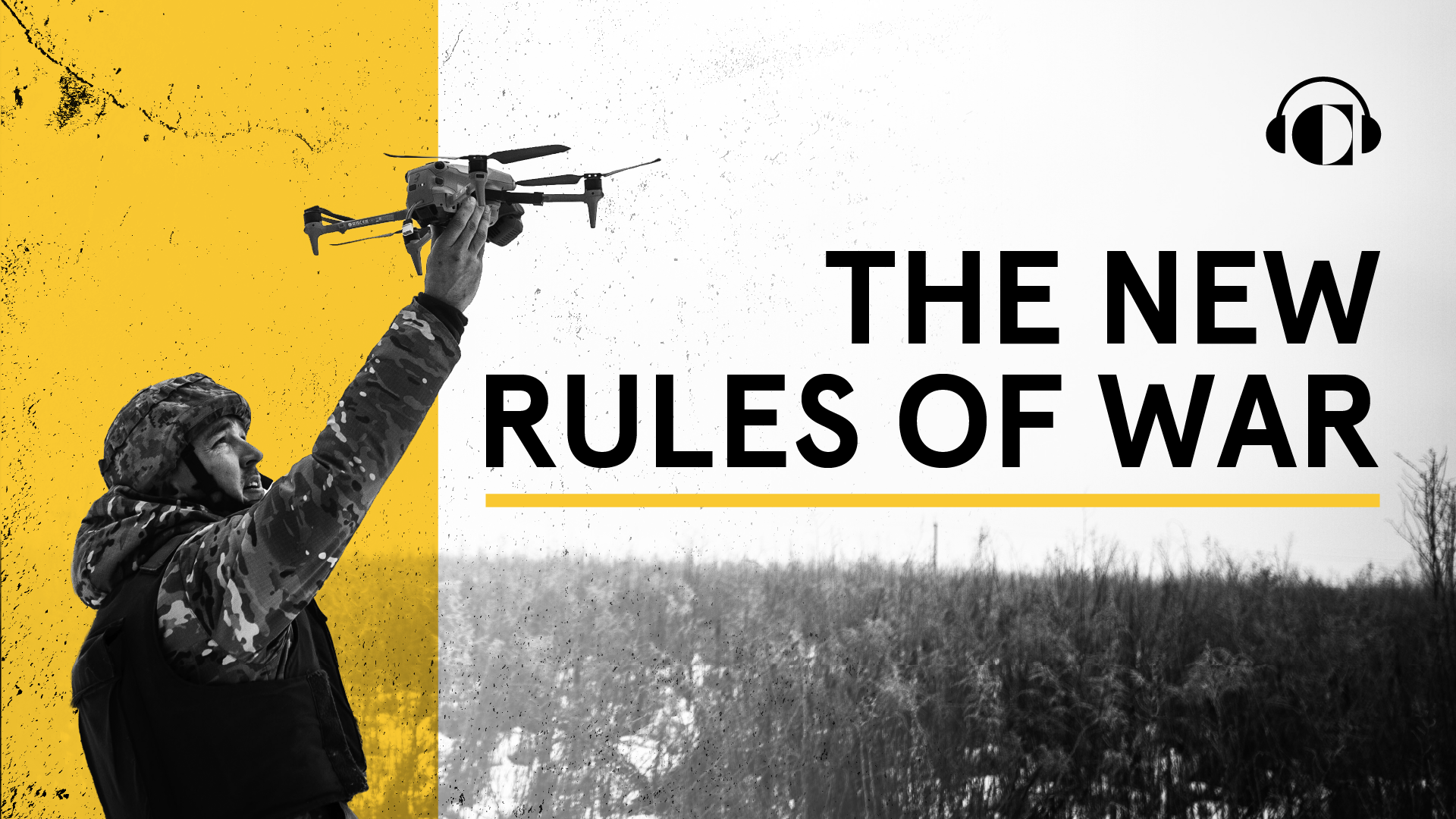
Steven Feldstein joins Jon Bateman on the world unpacked to discuss his new book, Bytes and Bullets, and explain how drones are reshaping wars from Ukraine to Sudan.
Jon Bateman, Steven Feldstein
A new book goes inside the AI industry and calls for a mass movement to restrain it.

Jon Bateman, Garrison Lovely
Brian Merchant on the Industrial Revolution’s failures, how AI undercuts workers, and the social order of technology.
Jon Bateman, Brian Merchant
The missing context that shows how AI isn’t the resource hog everyone thinks it is – with Andy Masley.

Jon Bateman, Andy Masley
Sophia Besch games out NATO’s future, Baltic scenarios, German rearmament, and Europe’s next way of war.

Jon Bateman, Sophia Besch